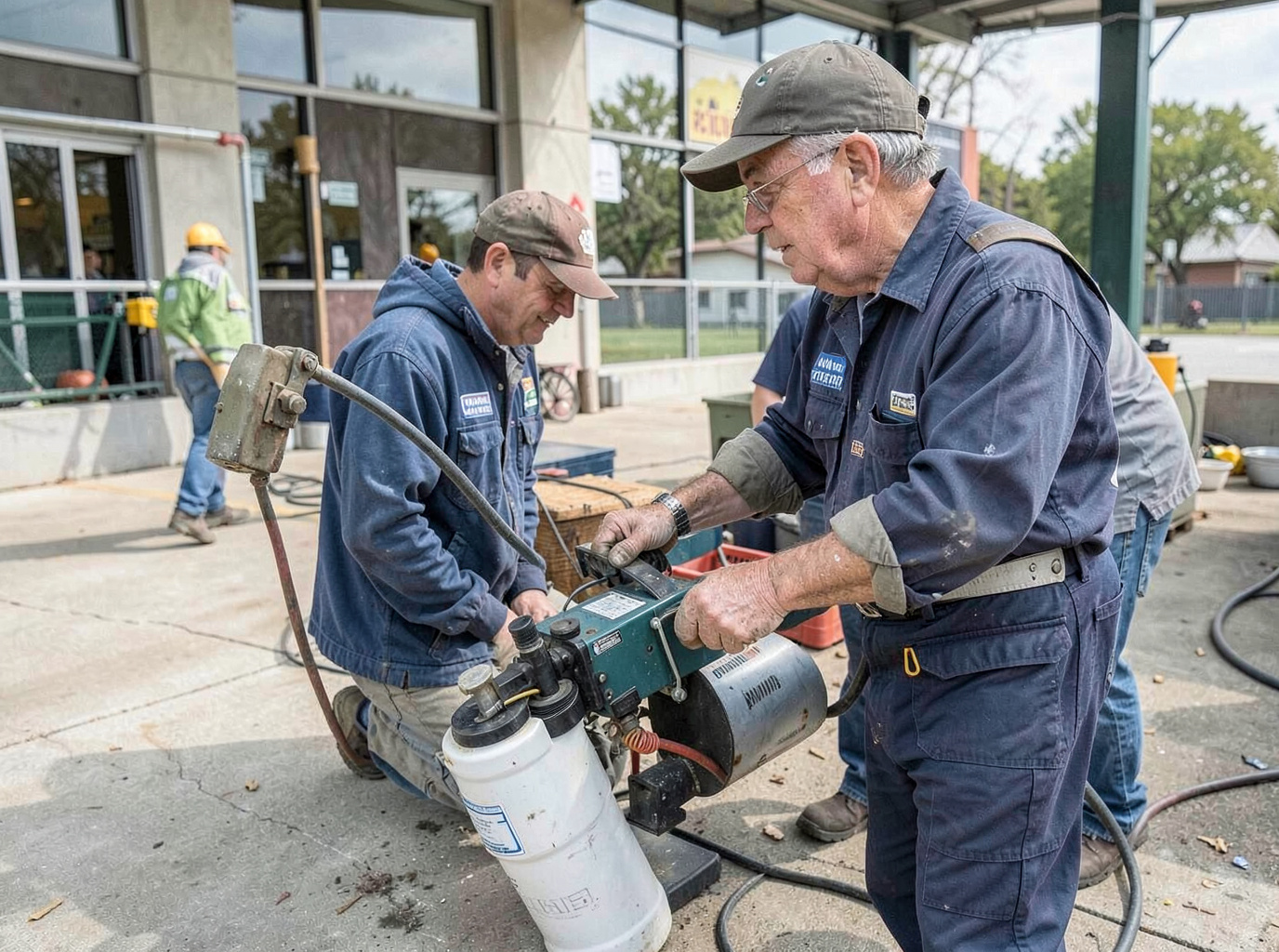
Columbus homes built before 1950 in German Village, Victorian Village and Olde Towne East often sit on brick foundations with clay soil that holds moisture after heavy rain. When a supply line bursts during a January freeze, water pools quickly in basements and under floor joists. Extraction crews must pull standing water within hours or risk mold growth in the humid continental summers that follow. Older plaster and lath walls absorb water differently than modern drywall, requiring slower, targeted removal to avoid structural collapse.
Summer thunderstorms dump several inches in a single afternoon across Clintonville and Grandview Heights, overwhelming sump systems and sending water through window wells. Crews use truck-mounted vacuums rated for 200-plus gallons per minute on these jobs because carpet pad and subfloor plywood delaminate fast in the warm, humid air. Extraction stops when moisture meters read below 15 percent on joists; anything higher triggers secondary drying equipment that runs for days. Skipping this step leaves hidden pockets that later damage hardwood in nearby rooms.
Sewage backups from aging city lines in Franklinton and the Hilltop require extraction plus biohazard protocols. Technicians wear full PPE and use HEPA air scrubbers while removing contaminated water to protect residents. After extraction, surfaces receive antimicrobial treatment before any drying begins. Homeowners who attempt their own cleanup often miss water trapped behind cabinets or under appliances, leading to repeated odor complaints months later.
Technician insight
In Columbus the thing that catches most people out with water extraction is how quickly cold winter air turns a small pipe burst into widespread saturation under hardwood in German Village and Victorian Village homes. Clay soil around those older foundations holds water against the brick for weeks, so extraction alone is never enough without follow-up drying that accounts for the humidity that rolls in every July.
Burst pipe under kitchen in Bexley
A supply line froze and split beneath the sink during a January cold snap. Water spread under the oak floor and into the crawlspace. Extraction crews removed 180 gallons, mapped moisture behind cabinets, then set dehumidifiers for three days. The homeowner avoided mold and kept the original flooring.
Water Extraction Services Services We Offer
✓Basement Water Extraction
Removes standing water from finished and unfinished basements common in pre-war homes throughout Bexley and Short North before mold sets in.
✓Carpet and Pad Extraction
Pulls water from carpet and padding in living areas after appliance leaks or roof failures, preventing delamination and odor in humid Columbus summers.
✓Emergency Flood Extraction
Rapid response removal of rainwater that enters through windows and doors during Franklin County storms, protecting hardwood and electrical systems.
✓Sewage Water Extraction
Handles contaminated water from backups in older sewer lines serving Franklinton and Linden, using biohazard protocols and proper disposal.
✓Appliance Leak Extraction
Extracts water from refrigerator, washer and water heater failures that pool under cabinets in kitchens and laundry rooms across Grandview Heights.
Water Extraction Services Cost in Columbus, OH
| Service | Typical Range | What Affects It |
|---|---|---|
| Residential basement extraction | $350–$850 | Higher when water reaches electrical or HVAC systems in pre-1950 homes. |
| Carpet and pad removal | $200–$450 | Depends on square footage and whether pad is glued down. |
| Sewage extraction | $600–$1,200 | Includes PPE and disposal; rises with square footage affected. |
| Emergency after-hours call | $150–$300 | Added fee outside Mon–Fri 8am–6pm or Sat 9am–2pm. |
Ranges are typical for Columbus, OH and confirmed with an exact written quote before any work starts.
How it works
- 1
On-Site Assessment
Technicians measure water depth, test affected materials and locate hidden pockets behind walls in the specific neighborhood home.
- 2
Standing Water Removal
Truck-mounted and portable extractors pull bulk water from floors, carpets and low areas until no visible pooling remains.
- 3
Moisture Mapping
Infrared cameras and meters identify remaining saturation in subfloors and framing before drying equipment is placed.
- 4
Final Verification
Post-extraction readings confirm moisture levels meet industry standards for the Columbus climate before any reconstruction begins.
Pricing
Pricing varies by water volume, contamination level and access difficulty in older Columbus homes.