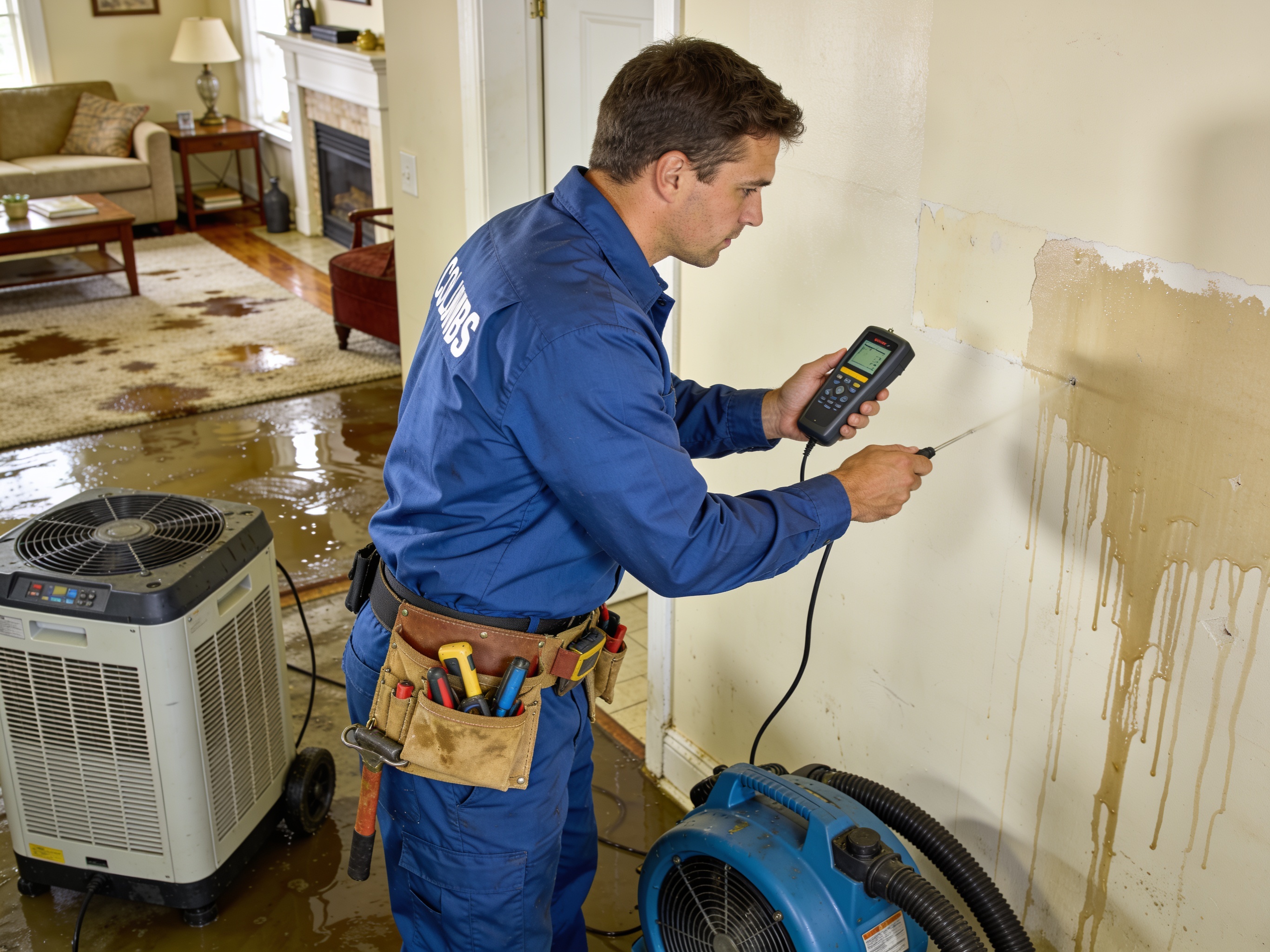
Columbus homes built before 1950 in German Village and Victorian Village often feature lath-and-plaster walls and stone foundations that trap moisture after pipe bursts or heavy rain. Cold winters cause frozen supply lines in unheated basements, and the subsequent thaw sends water into joist pockets that standard fans miss. Restoration crews must pull baseboards and use moisture meters on brick and plaster rather than relying on surface readings alone.
Franklin County’s humid continental climate brings sudden summer thunderstorms that overwhelm downspouts on narrow lots in Grandview Heights and Short North. Water migrates under hardwood floors and into crawl spaces common in Clintonville, creating hidden mold within 48 hours. Technicians stage dehumidifiers sized for the square footage and monitor relative humidity daily until readings stay below 50 percent for three consecutive days.
Sewage backups from aging city lines in Franklinton and Hilltop require full containment and disposal of contaminated carpet pad and insulation. Crews remove affected materials to the studs when Category 3 water contacts drywall lower than 12 inches, then apply antimicrobial treatments before rebuilding. Homeowners in Bexley and Olde Towne East frequently need documentation for insurance that lists every removed item and drying log entry.
Nearby cities like Dayton and Cincinnati share similar stock but Columbus crews see more limestone foundations that crack along mortar joints after repeated freeze-thaw cycles. Proper drying prevents recurring issues in these older structures where vapor barriers were never installed.
Technician insight
In Columbus, the thing that catches most people out with Water Damage Restoration is hidden moisture trapped behind plaster in pre-1940 homes throughout German Village and Bexley; after a winter pipe burst the thaw pushes water into joist pockets that surface fans never reach, so you have to open walls early or the job doubles later.
Clintonville Pipe Burst
A frozen supply line thawed in a 1920s Clintonville bungalow, sending water under oak floors into the crawl space. Crews extracted standing water, pulled baseboards, and ran drying equipment for five days until joists tested dry. New subfloor sections and pad were installed before the homeowners moved furniture back.
Water Damage Restoration Services We Offer
✓Basement Water Extraction
Removes standing water from Columbus basements using submersible pumps and truck-mounted extractors before mold sets in on stone or concrete walls.
✓Structural Drying Services
Places industrial air movers and dehumidifiers to pull moisture from lath, plaster and joists in Victorian Village and Bexley homes after leaks.
✓Carpet and Flooring Restoration
Lifts and dries hardwood and carpet in Clintonville and Grandview Heights properties while replacing saturated padding to prevent cupping and odor.
✓Sewage Cleanup and Disposal
Handles Category 3 water removal from Franklinton and Hilltop homes, including contaminated material disposal and antimicrobial application.
✓Attic Insulation Replacement
Removes wet insulation after roof leaks or ice dams common in Short North and Olde Towne East, then installs new material to restore R-value.
Water Damage Restoration Cost in Columbus, OH
| Service | Typical Range | What Affects It |
|---|---|---|
| Initial Assessment And Documentation | $150–$300 | Higher when multiple rooms or insurance paperwork required |
| Water Extraction Per Room | $400–$900 | Varies with water depth and Category 1 versus Category 3 |
| Full Structural Drying | $800–$2,200 | Driven by home size, plaster walls, and days needed to reach dry standard |
| Sewage Cleanup Add-On | $1,200–$3,000 | Includes containment, disposal, and antimicrobial steps |
Ranges are typical for Columbus, OH and confirmed with an exact written quote before any work starts.
How it works
- 1
On-Site Assessment
Technician inspects all affected rooms, uses moisture meters on walls and floors, and documents damage for insurance.
- 2
Water Removal
Pumps and extractors clear standing water from basements and crawl spaces before hidden pockets remain.
- 3
Drying And Monitoring
Air movers and dehumidifiers run until readings stabilize; daily checks confirm progress in older plaster construction.
- 4
Material Removal And Sanitation
Cuts out saturated drywall or insulation, treats surfaces, and prepares for rebuild where needed.
- 5
Final Verification
Post-drying inspection confirms moisture levels meet industry standards before any reconstruction begins.
Pricing
Cost depends on water category, square footage affected, and whether hidden damage requires opening walls or floors.