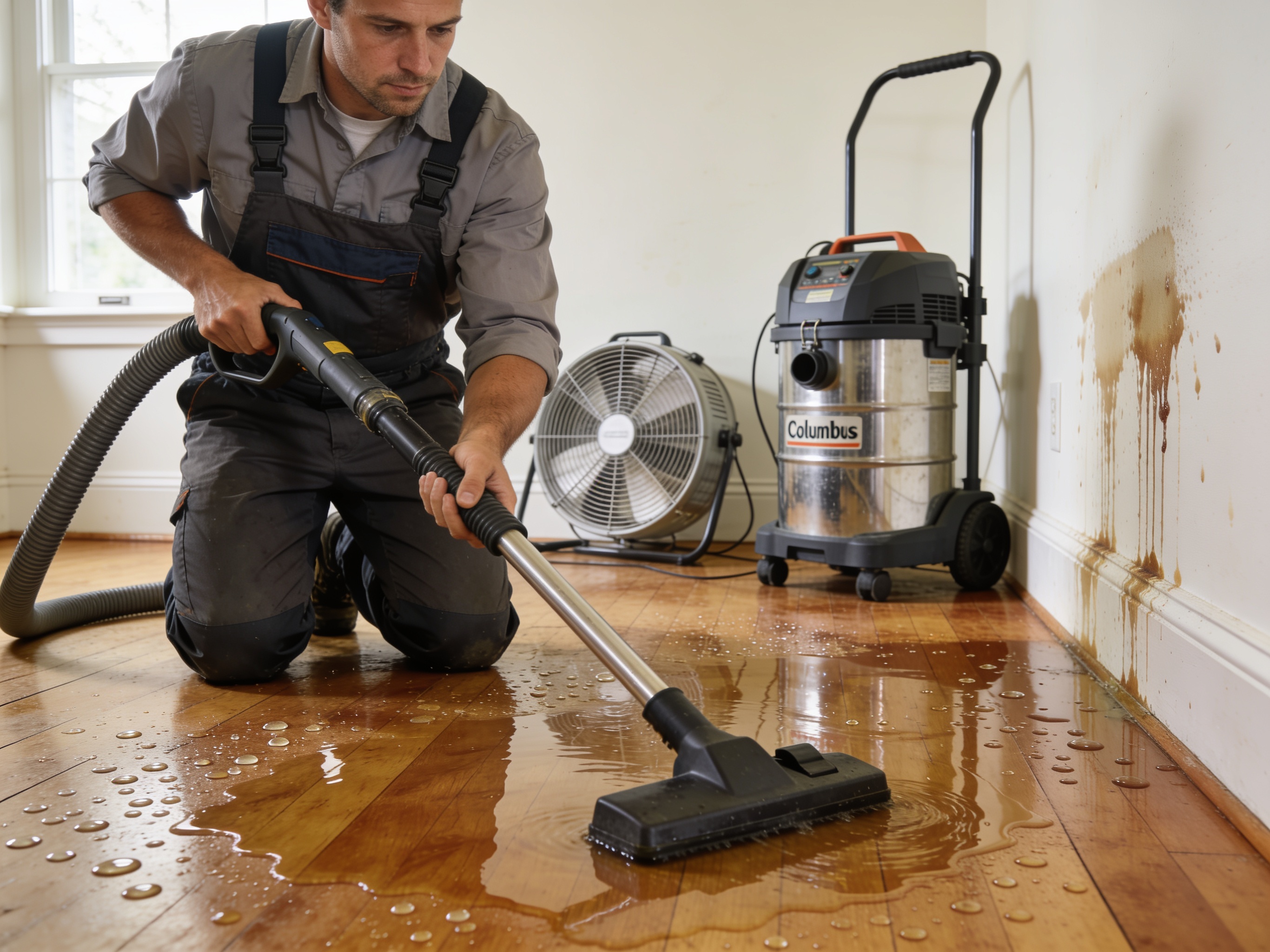
Columbus sits in Franklin County under a humid continental climate where winter lows frequently drop below freezing. This stresses aging galvanized and cast-iron supply lines common in Short North, German Village and Victorian Village homes built before 1950. When a pipe bursts inside a wall, water travels along joists and pools in basements or crawl spaces that lack modern vapor barriers. Technicians must open ceilings or floors selectively, document hidden moisture with meters, and remove saturated insulation without disturbing knob-and-tube wiring still found in many pre-war structures.
Flooding from the Scioto and Olentangy rivers plus heavy summer thunderstorms affects lower-lying blocks in Franklinton, Hilltop and Olde Towne East. Water enters through window wells and foundation cracks in brick homes on clay soils that hold moisture for weeks. Extraction crews use submersible pumps and air movers rated for 200-plus pints per day, then monitor humidity levels for several days because rapid drying prevents secondary mold growth behind baseboards. Disposal of contaminated carpet and drywall must follow Franklin County health guidelines to avoid fines.
Nearby cities such as Cleveland and Cincinnati experience similar freeze-thaw cycles, yet Columbus jobs often involve tighter access in row-house layouts or multi-unit buildings in Grandview Heights and Clintonville. Crews coordinate with landlords on shared walls and must protect hardwood floors that warp quickly when left wet. Every project ends with a written drying log that homeowners can show insurers, because claims adjusters in Franklin County now require proof of moisture readings below 15 percent before approving repairs.
Technician insight
In Columbus the thing that catches most people out with Water Damage Repair is older homes in German Village and Victorian Village where knob-and-tube wiring and plaster walls sit behind the same pipes that freeze every January. Homeowners shut off the main valve but skip opening the wall to check how far water traveled along the joists, so hidden pockets stay wet through our humid summers and grow mold before anyone notices.
Burst Pipe in Bexley Two-Story
A supply line froze and split in a 1928 Bexley home during a January cold snap. Water traveled under the hardwood floor into the dining room and down into the finished basement. Crews extracted water, ran drying equipment for four days, removed two sections of flooring and replaced saturated plaster. The home passed final moisture checks and the owner avoided a full basement gut.
Water Damage Repair Services We Offer
✓Burst Pipe Water Extraction
Rapid removal of standing water from supply-line failures common in pre-1960 Columbus homes, followed by targeted drying to protect original plaster and hardwood.
✓Basement Flood Cleanup
Pump-out and dehumidification after river or storm flooding in Franklinton and Hilltop properties where clay soil keeps foundations wet for days.
✓Ceiling Leak Repair
Locate and stop roof or second-floor plumbing leaks that stain ceilings in two-story homes throughout Bexley and Clintonville, then replace damaged drywall and insulation.
✓Appliance Leak Restoration
Address water from washing machines, water heaters and refrigerators that escapes onto finished floors in ranch-style homes in Linden and Grandview Heights.
✓Mold Prevention After Water Damage
Apply antimicrobial treatments and install moisture barriers in crawl spaces and basements to stop hidden mold growth triggered by Columbus humidity.
Water Damage Repair Cost in Columbus, OH
| Service | Typical Range | What Affects It |
|---|---|---|
| Initial Assessment And Moisture Mapping | $125–$275 | Varies by property size and number of rooms checked. |
| Water Extraction | $400–$1,200 | Depends on depth of standing water and access. |
| Equipment Drying (Per Day) | $150–$350 | Number of air movers and dehumidifiers required. |
| Drywall And Insulation Replacement | $600–$2,500 | Linear feet affected and finish matching needs. |
Ranges are typical for Columbus, OH and confirmed with an exact written quote before any work starts.
How it works
- 1
On-Site Assessment
Technician inspects all affected rooms, uses moisture meters on walls and floors, and identifies the water source while documenting conditions for insurance.
- 2
Water Removal
Submersible pumps and wet vacuums extract standing water, then contents are moved or protected before drying equipment is placed.
- 3
Structural Drying
Air movers and dehumidifiers run until meter readings drop below 15 percent; daily checks prevent over-drying that can crack wood framing.
- 4
Repairs And Restoration
Replace saturated drywall, insulation and flooring, then match finishes so repairs blend with original trim found in older Columbus neighborhoods.
- 5
Final Walk-Through
Review drying logs with the homeowner and provide guidance on preventing future issues from winter freezes or summer storms.
Pricing
Upfront written quotes after inspection; final price depends on water volume, affected square footage and drying duration.