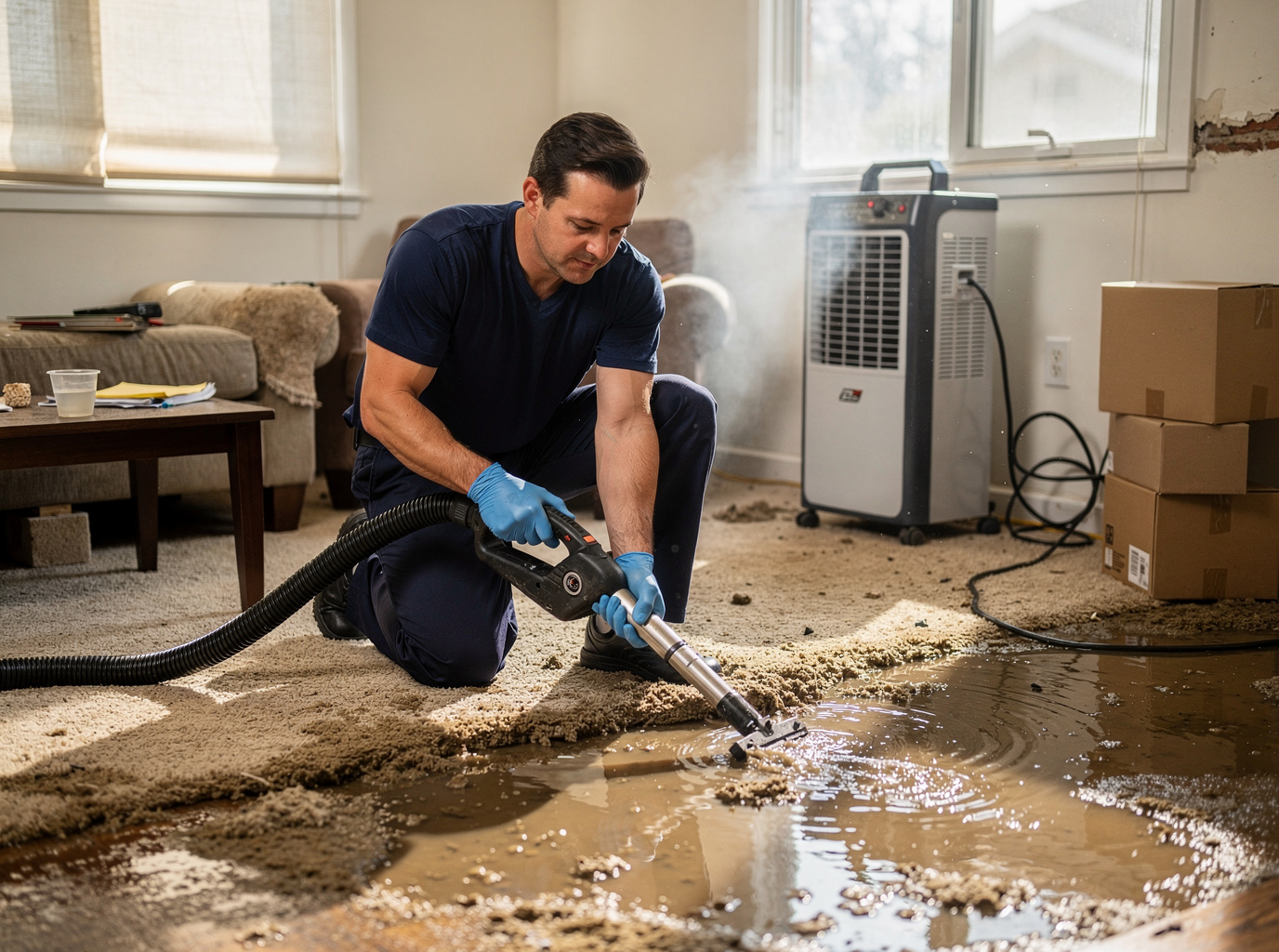
Columbus sits in Franklin County with a humid continental climate that brings heavy summer thunderstorms and winter freeze-thaw cycles. Older brick and frame homes in German Village, Victorian Village and Olde Towne East often have stone or clay-tile foundations and plaster walls that trap moisture after flood events. When water enters through low-lying yards near the Scioto or Olentangy, crews must pull baseboards early and use moisture meters on lath because hidden saturation leads to mold within 48 hours in the warm months.
Flat terrain across Clintonville, Linden and parts of Franklinton creates slow drainage, so standing water can remain against foundations for days. In these neighborhoods, crews frequently encounter combined sewer overflows after heavy rain that push contaminated water into finished basements. Extraction must include negative-air machines and HEPA filtration to handle the sewage load, and drying times stretch longer in tightly built 1920s row homes where air cannot circulate freely between shared walls.
Nearby cities like Cleveland and Cincinnati share similar winter pipe-burst risks, but Columbus summers produce more intense localized downpours that overwhelm older storm sewers in Hilltop and Grandview Heights. Restoration teams document every layer removed for insurance adjusters and often coordinate with city permits when structural work touches load-bearing walls in historic districts. Skipping thermal imaging on concrete slabs in Bexley homes commonly leaves residual moisture that reappears as efflorescence months later.
Technician insight
In Columbus the thing that catches most people out with flood damage restoration is how quickly moisture travels up plaster walls in 1920s German Village and Victorian Village homes during a summer thunderstorm. Homeowners often stop at the visible water line and miss the hidden saturation behind baseboards that later grows mold when the first cold snap hits.
Clintonville Basement After Heavy Rain
A 1930s home in Clintonville took several inches of water through the back door after an overnight storm. Crews found saturated hardwood subfloor and wet insulation in the rim joists. Extraction and targeted drying prevented mold while preserving the original flooring.
Flood Damage Restoration Services We Offer
✓Basement Flood Extraction
Rapid removal of standing water from Columbus basements using truck-mounted pumps and portable extractors suited to narrow German Village access points.
✓Sewage Backup Cleanup
Contaminated water removal and disinfection after combined sewer events common in Franklinton and Linden following heavy Franklin County rains.
✓Structural Drying and Dehumidification
Industrial air movers and low-grain dehumidifiers placed to dry plaster, joists and subfloors in older Short North and Victorian Village homes without damaging historic finishes.
✓Mold Prevention After Flooding
Antimicrobial application and moisture mapping on lath-and-plaster walls to stop growth in the warm, humid summers typical of central Ohio.
✓Contents and Document Drying
Freeze-drying and cleaning of books, photos and furniture salvaged from flooded homes in Bexley and Clintonville before secondary damage sets in.
Flood Damage Restoration Cost in Columbus, OH
| Service | Typical Range | What Affects It |
|---|---|---|
| Initial Assessment And Moisture Mapping | $125–$275 | Varies by square footage and number of affected levels in older Columbus homes |
| Water Extraction Per Day | $350–$650 | Higher for sewage or when access is limited in row-house neighborhoods |
| Equipment Drying Package | $400–$900 | Includes daily checks until dry; lengthened by summer humidity in Franklin County |
| Contents Drying And Cleaning | $200–$500 | Depends on volume of documents or textiles affected |
Ranges are typical for Columbus, OH and confirmed with an exact written quote before any work starts.
How it works
- 1
On-Site Assessment
Technician inspects affected areas in the home, maps moisture with meters, and notes construction type common to the neighborhood.
- 2
Water Extraction
Standing water and saturated materials are removed using equipment sized for the property's layout and access constraints.
- 3
Drying And Monitoring
Air movers and dehumidifiers run while daily moisture readings track progress until levels match unaffected areas of the structure.
- 4
Restoration And Repairs
Removed flooring, drywall or trim is replaced and surfaces are treated to prevent future issues from Columbus climate cycles.
Pricing
Upfront quotes provided after inspection; final cost depends on water volume, contamination level and drying duration.