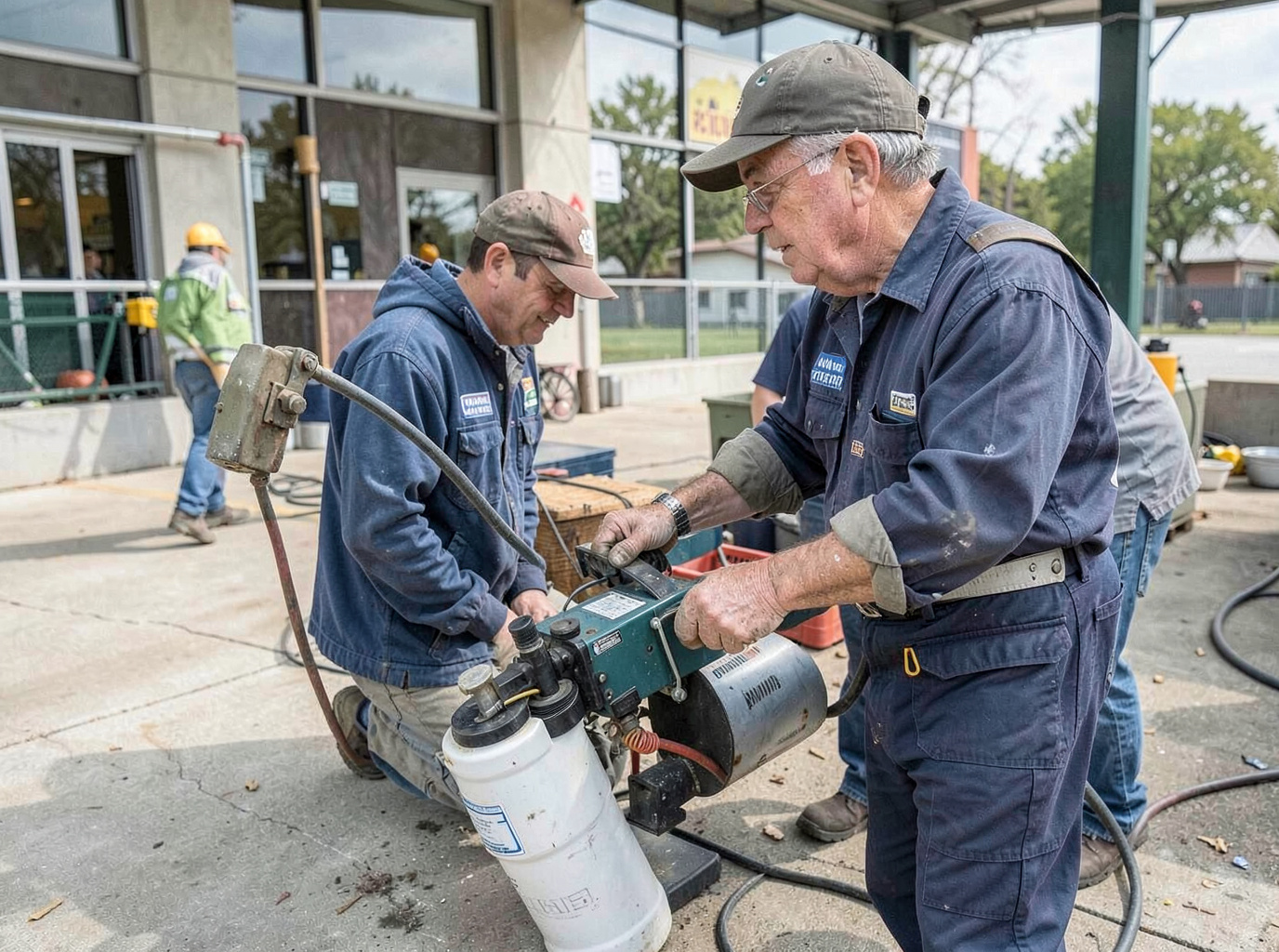
Mount Vernon sits just east of downtown Columbus with a stock of early 1900s brick and frame homes on small lots. Many basements lack modern waterproofing, so spring thaws and summer thunderstorms send water through old foundation cracks and floor drains. Crews based at 729 N James Rd reach these addresses via Mount Vernon Avenue within minutes, setting up extraction before moisture migrates into plaster walls common in the neighborhood.
Franklin County winters bring freeze-thaw cycles that crack older cast-iron pipes under Mount Vernon streets. When a line bursts, water pools quickly on the flat terrain and seeps into neighboring basements along 20th and 21st Streets. Technicians familiar with the tight alleys and limited driveway access bring compact drying equipment that fits the narrow lots without blocking traffic on these residential blocks.
Proximity to I-670 and the railroad corridor adds runoff from elevated roadbeds during heavy rains. Properties along the eastern edge of the neighborhood see repeated seepage through rear walls. Targeted dehumidification and moisture mapping keep the work contained to the affected side of each home while preserving the historic trim and hardwood floors that define Mount Vernon housing.
Around 33. Mount Vernon
We regularly work near:
- 📍Mount Vernon Avenue
- 📍Mount Vernon Plaza
- 📍King-Lincoln District
- 📍Columbus East High School
- 📍Near Franklin Park Conservatory
Water Damage Repair in 33. Mount Vernon — Local Notes
- •Pre-1940 homes on narrow lots require compact equipment to avoid blocking alleys off Mount Vernon Avenue.
- •Flat grades and minimal rear-yard drainage cause water to pool against rear foundations after summer storms.
- •Freeze-thaw cycles in Franklin County winters repeatedly stress original cast-iron supply lines under these streets.
- •Tight access between neighboring brick homes limits large dehumidifier placement, so crews use stacked drying setups.