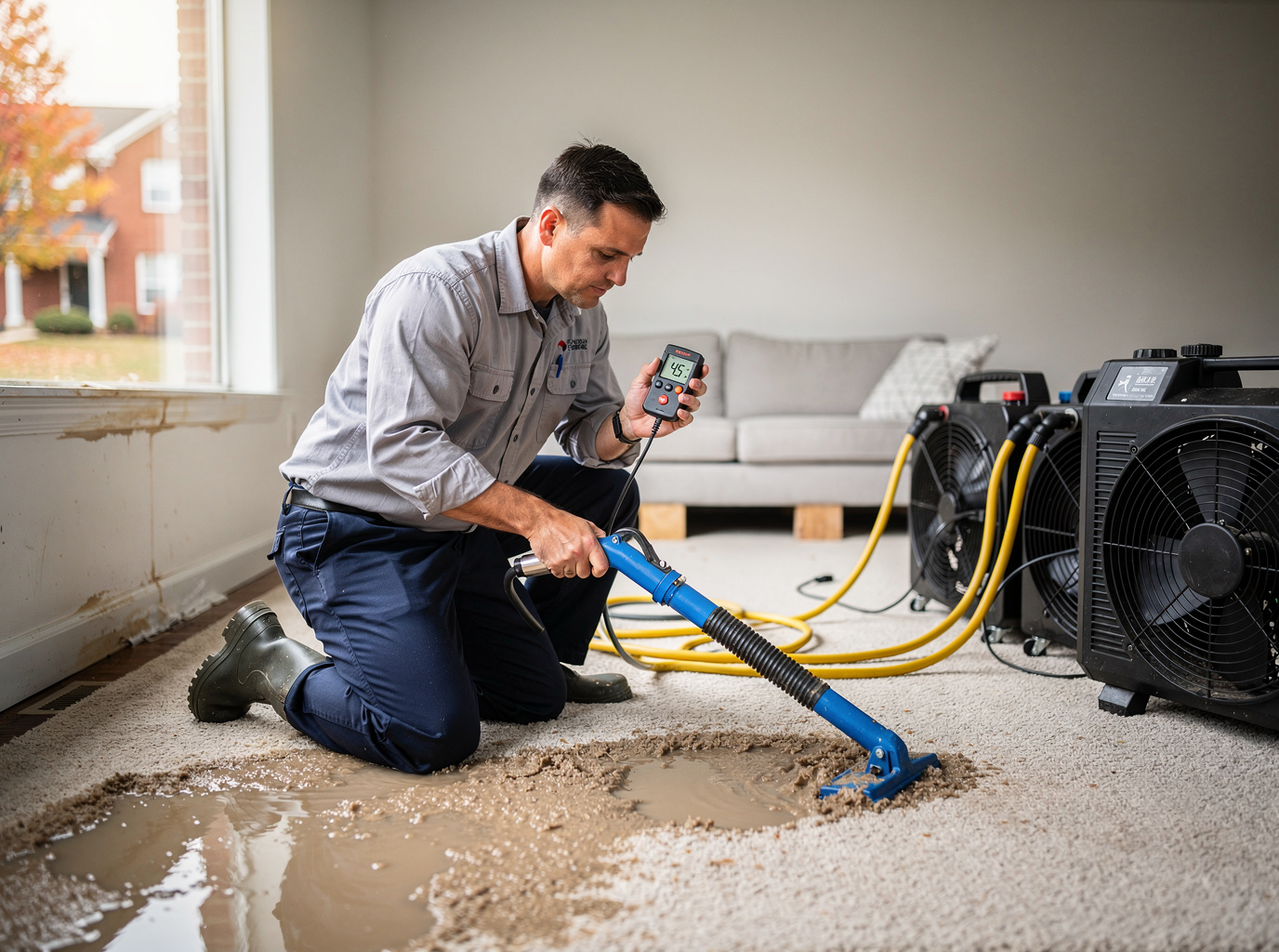
Grandview Heights sits on a compact grid of early-1900s bungalows and two-story frame homes between Grandview Avenue and the Olentangy River. Tight lots and narrow driveways mean our extraction equipment must be staged on the street or carried through side gates when a burst pipe or ice-dam leak hits a basement. Winters here drop below freezing for weeks, so frozen supply lines in crawl spaces are common and require targeted drying under floor joists rather than whole-room fans.
We reach the neighborhood from our base at 729 N James Rd within thirty minutes most weekdays. Crews know which alleys stay open after heavy snow and which blocks have combined sewers that back up when the river rises. That local routing keeps response times short when a Grandview Heights homeowner calls about ceiling stains or musty drywall after a summer storm.
Service stops at Mon–Fri 8am–6pm and Sat 9am–2pm. Every job starts with moisture mapping of the actual plaster and lath walls typical on these streets so we remove only the damaged sections instead of guessing.
Around 24. Grandview Heights
We regularly work near:
- 📍Grandview Avenue
- 📍Grandview Heights High School
- 📍Grandview Yard
- 📍Third Avenue
- 📍Grandview Heights Public Library
Water Damage Repair in 24. Grandview Heights — Local Notes
- •Many Grandview Heights homes built before 1930 have balloon framing and plaster walls that trap water behind baseboards; we pull trim carefully to avoid cracking original woodwork.
- •Narrow 30-foot lots limit equipment placement, so we often run portable extractors and dehumidifiers through kitchen doors rather than garage access.
- •Proximity to the Olentangy means elevated groundwater after heavy rain; we check sump discharge lines on every first-floor job.
- •Winter freeze-thaw cycles crack older cast-iron stacks under front porches, sending water into finished basements that back up to Grandview Avenue sidewalks.